In early December 2025, Washington, D.C. once again played host to one of the most anticipated cultural events of the year:
the annual Kennedy Center Honors — a gala celebration that has, for nearly half a century, recognized the lifetime achievements of the nation’s most influential artists and entertainers.
But this year’s ceremony — the 48th — unfolded in a climate of unprecedented controversy and transformation, signaling not just a celebration of artistic legacy but also the collision of politics, culture, and media in ways few could have predicted.
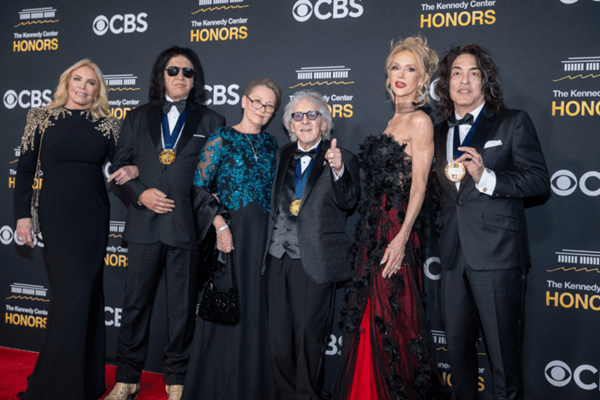
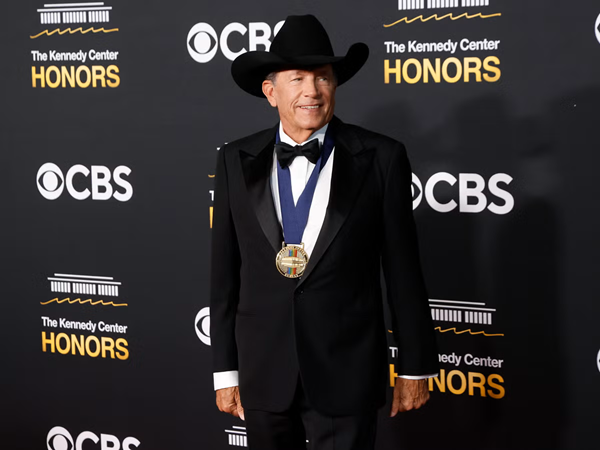
At the center of this convergence was country music legend George Strait, who stood shoulder to shoulder with other cultural heavyweights such as rock icons KISS, film star Sylvester Stallone, disco legend Gloria Gaynor, and Broadway great Michael Crawford.

Their selection as honorees for 2025 represented an eclectic and storied cross‑section of American entertainment — spanning genres, eras, and audiences.
But the context for this year’s Honors was far from routine.
A Different Kennedy Center
The institution that hosts the Kennedy Center Honors — The John F. Kennedy Center for the Performing Arts — has been an American cultural landmark since its dedication in 1971 as a living memorial to President John F. Kennedy.
Traditionally, the center has functioned as a bipartisan institution celebrating American artistic achievement and serving as a hub for orchestral, theatrical, and cultural performances from around the world.
In 2025, however, that narrative was fundamentally altered.
Earlier in the year, President Donald Trump, now in his second term, initiated a sweeping overhaul of the center’s leadership.
Trump removed the existing board of trustees, replacing them with his own appointees, and declared himself chairman of the board, an unprecedented move for a sitting president.
This shift in governance was followed by a series of controversial changes that have rippled through Washington’s cultural community ever since.
In mid‑December, just weeks after the Honors ceremony was recorded, the center’s board — now composed overwhelmingly of Trump loyalists — voted to rename the institution “The Donald J. Trump and The John F. Kennedy Memorial Center for the Performing Arts,” or the shortened “Trump‑Kennedy Center.”
White House officials characterized the vote as unanimous, though critics and some board members contested that claim and claimed procedural irregularities.
The renaming instantly sparked legal challenges — including a lawsuit filed by Democratic U.S. Representative Joyce Beatty, who argues that federal law designates the Kennedy Center specifically as a memorial to President Kennedy and that any name change requires congressional approval.
Members of the Kennedy family have also publicly condemned the move, saying that the memorial’s legacy should remain intact and that the center has no legal authority to add another individual’s name without a formal act of Congress.
Politics Meets Performance
Against this backdrop of institutional upheaval, the 2025 Kennedy Center Honors carried both symbolic and contentious overtones.
Traditionally, the honorees are selected by a committee of past winners and trustees who aim to honor those whose careers have reshaped American culture.
This year, however, President Trump himself played a decisive role in selecting the honorees, personally announcing the class in August 2025.
Trump touted the lineup — which included both mainstream and legacy stars — as representative of “some of the greatest talents ever assembled,” speaking at a medal presentation dinner where he lauded their contributions to the arts.
But what might once have been viewed as a straightforward celebration of American culture was refracted through the prism of political controversy.
Trump’s decision to host the Honors — making him the first sitting president ever to do so — drew both praise from his supporters and sharp criticism from others within the arts world.
Performances and Tributes
Onstage at the Kennedy Center Opera House in Washington, D.C., the tributes to George Strait — often called the “King of Country” — were heartfelt and meticulously crafted.
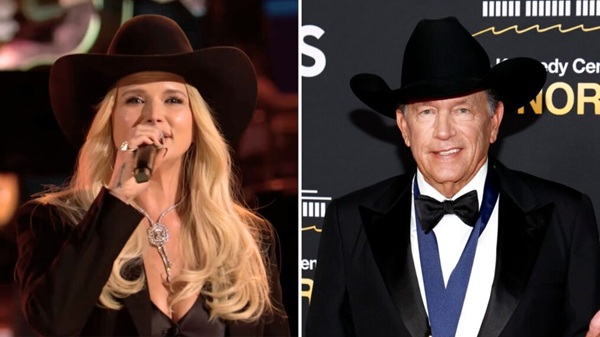
Miranda Lambert delivered a pitch‑perfect performance of Strait’s “Run,” capturing both the emotional nuance and technical precision that the song requires.
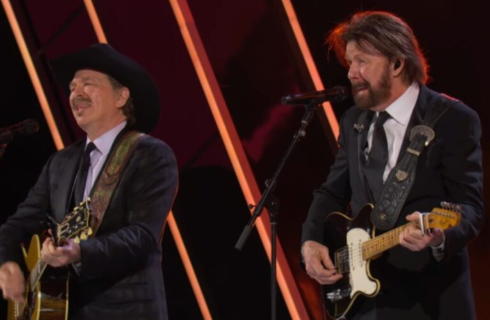
Brooks & Dunn — themselves veterans of the country music world — brought the house down with their rendition of “Amarillo by Morning,” a song that, despite never reaching No. 1 on the charts, has become one of Strait’s most beloved and enduring classics.
Originally released in 1982 on Strait’s Strait from the Heart, “Amarillo by Morning” peaked at No. 4 on Billboard’s Hot Country Songs chart, yet its influence and popularity have long outgrown its chart position, becoming a defining song of the genre.
Many fans and industry insiders consider it Strait’s signature performance, and he has frequently cited it as one of his personal favorites among his extensive catalog.
Hearing Brooks & Dunn interpret this iconic track underscored the depth of respect and admiration Strait commands among his peers.
For performers of their caliber to take on such a well‑known song — and to do so with effortless skill — was a testament to both Strait’s songwriting legacy and the reverence he commands within the industry.
Country music’s deep roots in American culture — from honky‑tonk bars to global stages — were on full display that evening.
The blend of traditional sounds with modern performance techniques illustrated how Strait’s work has bridged generations of listeners and artists alike.
Broader Backdrop: Ratings and Reception
The televised broadcast of the Honors on CBS and Paramount+ also reflected the broader tensions surrounding this year’s event.
When the December 23 broadcast aired, CBS included promotional elements that referenced the venue’s then‑controversial new name, even as the network technically retained the traditional “Kennedy Center Honors” title pending legal and legislative clarity.
Despite Trump’s claims that his involvement would make the show “the highest‑rated ever,” preliminary data showed the opposite: the broadcast drew approximately 2.65 million viewers, marking the lowest audience in the Honors’ history, a significant drop from previous years.
The network also edited down Trump’s opening remarks — originally 12 minutes in length — to just two minutes for the television audience, removing more controversial comments before airing.
These dynamics reflect a broader polarization around cultural institutions in the United States, where major arts events are increasingly entwined with political messaging and public debate.
Legacy and Future
For honorees like George Strait, however, the focus remains on artistic achievement and cultural legacy. Strait’s influence — spanning decades of chart‑topping hits, sold‑out tours, and accolades from peers — was unmistakably the centerpiece of his tribute performance.
And although this year’s Honors were shaped by controversy in ways few others have been, the core celebration of artistic excellence endured.
Brooks & Dunn, Lambert, and other performers demonstrated how the Honors can continue to showcase musical artistry even amid shifting political climates.
Whether this year’s class will include future honorees from among the artists who paid tribute — like Brooks & Dunn — remains speculation, but many observers believe that their performances could very well lead to future recognition.
In the end, the 2025 Kennedy Center Honors represented both a unique cultural milestone and a flashpoint in ongoing debates about the role of politics in American artistic institutions.
From its star‑studded lineup to its record‑low ratings, from institutional upheaval to heartfelt tributes, this year’s Honors were as complex as the cultural moment itself.
And as the nation watches how the legal challenges and debates over the future of the Kennedy Center unfold, the impact of these decisions on American culture — and on the legacies of artists like George Strait — will continue to be felt for years to come.
In early December 2025, Washington, D.C. once again played host to one of the most anticipated cultural events of the year:
the annual Kennedy Center Honors — a gala celebration that has, for nearly half a century, recognized the lifetime achievements of the nation’s most influential artists and entertainers.
But this year’s ceremony — the 48th — unfolded in a climate of unprecedented controversy and transformation, signaling not just a celebration of artistic legacy but also the collision of politics, culture, and media in ways few could have predicted.
At the center of this convergence was country music legend George Strait, who stood shoulder to shoulder with other cultural heavyweights such as rock icons KISS, film star Sylvester Stallone, disco legend Gloria Gaynor, and Broadway great Michael Crawford.
Their selection as honorees for 2025 represented an eclectic and storied cross‑section of American entertainment — spanning genres, eras, and audiences.
But the context for this year’s Honors was far from routine.
A Different Kennedy Center
The institution that hosts the Kennedy Center Honors — The John F. Kennedy Center for the Performing Arts — has been an American cultural landmark since its dedication in 1971 as a living memorial to President John F. Kennedy.
Traditionally, the center has functioned as a bipartisan institution celebrating American artistic achievement and serving as a hub for orchestral, theatrical, and cultural performances from around the world.
In 2025, however, that narrative was fundamentally altered.
Earlier in the year, President Donald Trump, now in his second term, initiated a sweeping overhaul of the center’s leadership.
Trump removed the existing board of trustees, replacing them with his own appointees, and declared himself chairman of the board, an unprecedented move for a sitting president.
This shift in governance was followed by a series of controversial changes that have rippled through Washington’s cultural community ever since.
In mid‑December, just weeks after the Honors ceremony was recorded, the center’s board — now composed overwhelmingly of Trump loyalists — voted to rename the institution “The Donald J. Trump and The John F. Kennedy Memorial Center for the Performing Arts,” or the shortened “Trump‑Kennedy Center.”
White House officials characterized the vote as unanimous, though critics and some board members contested that claim and claimed procedural irregularities.
The renaming instantly sparked legal challenges — including a lawsuit filed by Democratic U.S. Representative Joyce Beatty, who argues that federal law designates the Kennedy Center specifically as a memorial to President Kennedy and that any name change requires congressional approval.
Members of the Kennedy family have also publicly condemned the move, saying that the memorial’s legacy should remain intact and that the center has no legal authority to add another individual’s name without a formal act of Congress.
Politics Meets Performance
Against this backdrop of institutional upheaval, the 2025 Kennedy Center Honors carried both symbolic and contentious overtones.
Traditionally, the honorees are selected by a committee of past winners and trustees who aim to honor those whose careers have reshaped American culture.
This year, however, President Trump himself played a decisive role in selecting the honorees, personally announcing the class in August 2025.
Trump touted the lineup — which included both mainstream and legacy stars — as representative of “some of the greatest talents ever assembled,” speaking at a medal presentation dinner where he lauded their contributions to the arts.
But what might once have been viewed as a straightforward celebration of American culture was refracted through the prism of political controversy.
Trump’s decision to host the Honors — making him the first sitting president ever to do so — drew both praise from his supporters and sharp criticism from others within the arts world.
Performances and Tributes
Onstage at the Kennedy Center Opera House in Washington, D.C., the tributes to George Strait — often called the “King of Country” — were heartfelt and meticulously crafted.
Miranda Lambert delivered a pitch‑perfect performance of Strait’s “Run,” capturing both the emotional nuance and technical precision that the song requires.
Brooks & Dunn — themselves veterans of the country music world — brought the house down with their rendition of “Amarillo by Morning,” a song that, despite never reaching No. 1 on the charts, has become one of Strait’s most beloved and enduring classics.
Originally released in 1982 on Strait’s Strait from the Heart, “Amarillo by Morning” peaked at No. 4 on Billboard’s Hot Country Songs chart, yet its influence and popularity have long outgrown its chart position, becoming a defining song of the genre.
Many fans and industry insiders consider it Strait’s signature performance, and he has frequently cited it as one of his personal favorites among his extensive catalog.
Hearing Brooks & Dunn interpret this iconic track underscored the depth of respect and admiration Strait commands among his peers.
For performers of their caliber to take on such a well‑known song — and to do so with effortless skill — was a testament to both Strait’s songwriting legacy and the reverence he commands within the industry.
Country music’s deep roots in American culture — from honky‑tonk bars to global stages — were on full display that evening.
The blend of traditional sounds with modern performance techniques illustrated how Strait’s work has bridged generations of listeners and artists alike.
Broader Backdrop: Ratings and Reception
The televised broadcast of the Honors on CBS and Paramount+ also reflected the broader tensions surrounding this year’s event.
When the December 23 broadcast aired, CBS included promotional elements that referenced the venue’s then‑controversial new name, even as the network technically retained the traditional “Kennedy Center Honors” title pending legal and legislative clarity.
Despite Trump’s claims that his involvement would make the show “the highest‑rated ever,” preliminary data showed the opposite: the broadcast drew approximately 2.65 million viewers, marking the lowest audience in the Honors’ history, a significant drop from previous years.
The network also edited down Trump’s opening remarks — originally 12 minutes in length — to just two minutes for the television audience, removing more controversial comments before airing.
These dynamics reflect a broader polarization around cultural institutions in the United States, where major arts events are increasingly entwined with political messaging and public debate.
Legacy and Future
For honorees like George Strait, however, the focus remains on artistic achievement and cultural legacy. Strait’s influence — spanning decades of chart‑topping hits, sold‑out tours, and accolades from peers — was unmistakably the centerpiece of his tribute performance.
And although this year’s Honors were shaped by controversy in ways few others have been, the core celebration of artistic excellence endured.
Brooks & Dunn, Lambert, and other performers demonstrated how the Honors can continue to showcase musical artistry even amid shifting political climates.
Whether this year’s class will include future honorees from among the artists who paid tribute — like Brooks & Dunn — remains speculation, but many observers believe that their performances could very well lead to future recognition.
In the end, the 2025 Kennedy Center Honors represented both a unique cultural milestone and a flashpoint in ongoing debates about the role of politics in American artistic institutions.
From its star‑studded lineup to its record‑low ratings, from institutional upheaval to heartfelt tributes, this year’s Honors were as complex as the cultural moment itself.
And as the nation watches how the legal challenges and debates over the future of the Kennedy Center unfold, the impact of these decisions on American culture — and on the legacies of artists like George Strait — will continue to be felt for years to come.