He arrived like a ghost—silent, unobtrusive, almost impossible to notice at first. There were no tears, no outbursts, no questions seeking explanation.
His eyes, wide and alert, never rested; they scanned, measured, and remembered everything. To call him withdrawn would have been a mistake. Distance implies a choice.
He did not choose to retreat; he was vigilant, constantly surveying, as if the world itself might shift without warning and he would need to respond. Every moment carried a tension that was hard to name.
Nights made the truth unavoidable. In the dark, we saw him gripping the mattress so tightly his knuckles whitened. He would curl against himself, listening to the sounds of the house, bracing for losses he had already imagined, anticipating dangers that might never arrive.
He did not move into our home in the usual sense of blending in or adapting. Instead, it felt as though he was testing us, testing the space, testing the boundaries of the life we were offering him.
Every detail mattered. He memorized exits—how each door swung, which locks made noise, which corners gave cover. He inspected cupboards, knowing where food might be stored and calculating how he could access it without drawing attention.
He hovered on the edges of hunger and fear, navigating the fine line between asserting himself and retreating further. For him, safety was not a feeling, an abstract reassurance.
Safety was something to be proven over time, something that required evidence in repetition, in reliability, in consistent action.
At first, we struggled to understand how to respond. Normal parenting routines felt alien. Mealtimes required negotiation; every offering of food needed to be non-threatening, visible but not imposed.
We learned to move carefully around him, to announce our presence gently before touching or adjusting anything in his vicinity. Even small gestures—like folding a blanket, putting out a clean cup, or leaving a snack in reach—took on monumental significance.
It wasn’t about discipline or instruction; it was about trust-building, showing that the world could meet him with patience rather than force.
Days passed without noticeable change. We reminded ourselves not to expect dramatic transformation, not to hope for sudden breakthroughs. Healing, we learned, does not arrive in fireworks or proclamations.
It is often the quiet accumulation of consistent, gentle gestures, repeated enough that they begin to outweigh past trauma. We held our routines steady: the same morning greeting at the breakfast table, the same smile when picking him up from school, the same quiet acknowledgment of effort and presence, no matter how small.
Each repetition said, in its way, “You are safe here. You are seen. You are valued.” Without words, without dramatics, this became the invisible scaffolding on which trust slowly climbed.
As the weeks turned into months, subtle signs of progress appeared. Questions began to emerge where there had been silence.
He asked about the meals on his plate, inquired about the small details of the household, or made fleeting comments about his day. These were not large conversations but tiny, almost imperceptible openings.
He began to move within the home with less rigid control, exploring corners without constant scanning, resting with brief moments of apparent calm.
When he laughed—or even smiled—it was a cautious thing, quick and tentative, as if testing the permanence of pleasure.
Each of these small acts was a testament to the painstaking work happening beneath the surface, the gradual rewriting of a nervous system that had once learned vigilance as a survival mechanism.
One night stands out vividly in our memory. It was a week that had felt particularly ordinary, filled with the usual rhythms: homework at the table, a bath, a story read aloud, blankets folded carefully over him before lights out.
I remember pausing at the doorway after turning off the lamp, expecting the usual tension, the clasped hands, the eyes wide and alert. Instead, he had relaxed. The door was unguarded.
His breathing was even. The mattress no longer bore the imprint of clenched fingers. In that simple, almost unremarkable moment, the weight of our shared months became tangible.
He had chosen, however unconsciously, to let go, to trust that the world—or at least this corner of it—would still exist when he awoke.
That night, I realized that healing does not arrive with spectacle. It does not arrive in announcements or accolades.

It comes softly, invisibly, in repeated gestures of consistency, in the invisible conversation between a child’s inner world and the steady presence of adults willing to meet them patiently.
Healing can look like a child finally believing, if only for a moment, that the world will still be there in the morning.
It can look like the first tentative laugh, the question asked without fear, the hand relaxed from an obsessive grip, the blanket that no longer feels like armor but like comfort.
It is a gradual process, marked by small victories that might appear insignificant to an outside observer. But each victory carries immense weight.
Every decision to sleep without guarding the door, every measured approach to sharing feelings or asking for help, is the accumulation of proof that the world can be predictable, safe, and steady.
In the quiet of these victories, trust is being rewritten into the very physiology of the child. Neural pathways that had been primed for anxiety begin to reorient toward stability.
Heart rates, previously elevated by anticipation of threat, find moments of calm. Cortisol levels stabilize in response to repeated evidence of reliability.
This is the science of trauma-informed caregiving manifesting in the simplest of household rituals: the folded blanket, the consistent pickup, the unhurried breakfast conversation.
Every day offered more subtle hints of progress. He began to explore rooms he had once skirted around, moving cautiously at first, then with increasing confidence.
He tried to initiate conversations, his questions sometimes shy, sometimes insistent, yet always sincere. Small displays of emotion became less regimented, more spontaneous.
Laughter lingered longer, tears were not hidden behind clenched fists, and he began to negotiate boundaries not with rigid vigilance but with cautious curiosity.
This was a transformation not of the self alone, but of the way he perceived the world around him—a world that had once felt dangerous, arbitrary, and unpredictable.
There were setbacks, naturally. Trust, once hard-won, can be fragile. A loud noise, a sudden change, or even a misunderstanding could trigger retreat, revisiting old patterns of anxiety.
But even in these moments, progress was visible. Where once a single disturbance would trigger hours of hypervigilance, he now responded with shorter episodes, recovering quickly when reassured.
This demonstrates an essential truth of healing: it is rarely linear. It is more like a spiral staircase, moving upward with occasional regressions, each loop higher than the last.
The role of caregivers in this process is both simple and monumental. Consistency is paramount. Predictable routines provide the scaffolding upon which trust can grow.
Patience is required, not just in the large gestures but in the accumulation of the small ones: the same breakfast at the same time, the same gentle approach to bedtime, the same acknowledgment of effort and presence.
Every repetition says, “You are safe here,” in a language that transcends words, reaching the deep, instinctual centers of the brain that govern threat response.
In observing these subtle shifts, we came to understand the profound power of quiet presence. It is tempting to think of healing as needing dramatic interventions—therapists, programs, structured exercises—but sometimes the most effective tools are invisible: patience, steadiness, and the soft repetition of trustworthiness.
The child learns not only that danger may be absent, but that a world can be predictable, that adults can be reliable, that needs can be met without coercion or fear. These lessons, invisible yet transformative, are the foundation upon which resilience is built.
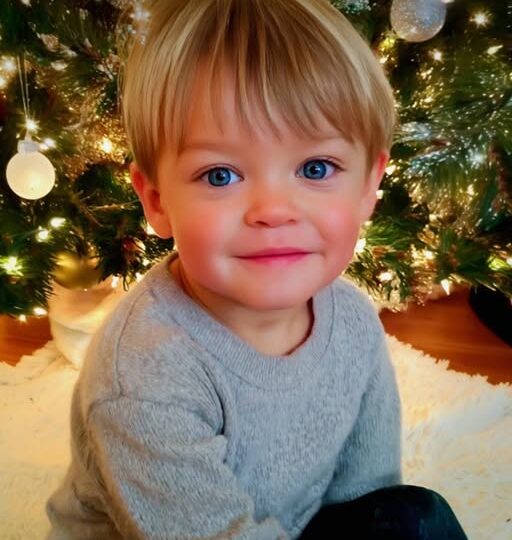
Months passed, and the child continued to evolve. He began to invest in relationships, initiating interactions with peers and adults in ways that once would have seemed impossible.
He experimented with small risks, asking questions, offering opinions, and showing pride in accomplishments, all with a cautious optimism that slowly grew into confidence. Each of these actions, though seemingly ordinary, represented a monumental shift from a past defined by hypervigilance and guardedness.
The moment of truly profound realization came not in a single dramatic event but as a culmination of countless small interactions.
When he finally slept through the night without guarding the door, when he asked for help without hesitation, when he laughed in a sustained and genuine way, we understood that the work had taken root.
Healing does not demand spectacle; it demands time, repetition, consistency, and quiet demonstration of reliability. It arrives softly, like dawn spreading light through a darkened room, imperceptibly changing the landscape until suddenly, the world feels safe to inhabit.
This process taught us, as caregivers, about the resilience of the human spirit. Children carry immense capacities for recovery when provided with stability and care.
Trauma, while powerful, does not define potential. With patience and consistency, even the most vigilant, wary child can begin to relax, to experiment with trust, and to reclaim joy in daily life.
The transformation is not always visible to outsiders, but to those who inhabit the intimate space of care, every small breakthrough carries deep significance.
By the time the child’s silences shortened and questions emerged, by the time he began to accept comfort without suspicion, we saw that the slow, patient rhythm of caregiving had achieved what fear and coercion never could.
Trust had been built not through grand gestures or dramatic declarations, but through the repeated, understated assurance that he was safe, that he could rely on others, that the world need not be navigated with constant vigilance. Healing had arrived not in chaos but in stillness.
And so we learned: recovery is quiet. Trust is nurtured in repetition. Safety is proven over time. And the child who once arrived like a ghost, whose eyes never rested, whose body was poised for loss, gradually began to inhabit his world fully.
He laughed more freely, slept more deeply, and asked questions without fear. In these everyday moments, we witnessed the profound truth: healing is not a sudden event.
It is a process, slow, steady, and often invisible, culminating in the softest, most transformative victory of all—the child finally believing that the world will still be there in the morning.