The fatal shooting of Alex Pretti, a 37-year-old intensive care nurse, has rapidly evolved from a localized incident in Minneapolis into a national flashpoint, revealing the deep fractures in American public trust and the volatile nature of federal enforcement policy. Since that fateful afternoon on January 24, 2026, when Pretti was killed by federal agents during an immigration enforcement action, the shockwaves have moved through the quiet hallways of the VA hospital where he worked, into the streets of Minnesota, and finally onto the bright, high-stakes stages of professional sports.
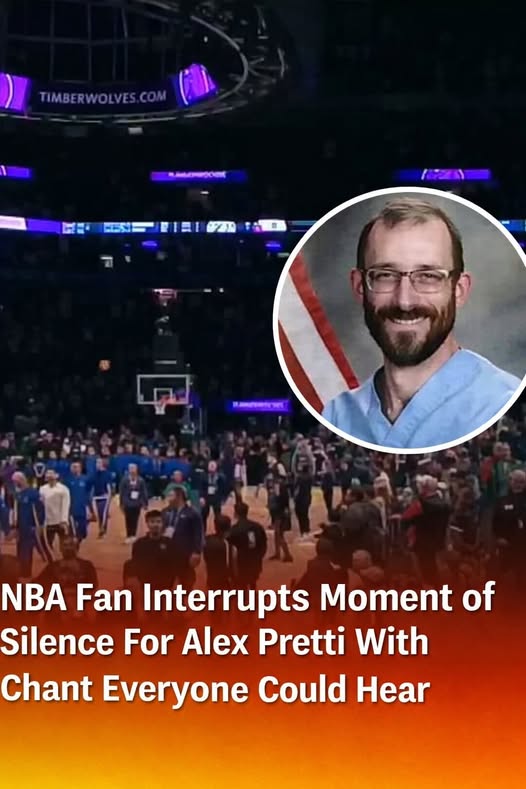
The weight of Pretti’s death was felt most acutely during a recent Minnesota Timberwolves home game, where the organization attempted to pay tribute to a man who spent his life in service to the community. Moments before tip-off, the announcer called for a moment of silence—a standard gesture of respect for a local figure. However, the atmosphere inside the arena quickly shifted from somber reflection to political defiance. The silence was shattered not by a stray whistle or crowd noise, but by a rising tide of anti-ICE chants that echoed through the rafters. The interruption underscored a growing sentiment that for many, Alex Pretti’s death is not merely a tragedy to be mourned, but a systemic failure to be protested.This intersection of sports and social activism is becoming increasingly common, but the Pretti case has drawn in voices from across the globe. San Antonio Spurs star Victor Wembanyama, an athlete known for his measured public persona, did not shy away from the controversy. He described the shootings in Minnesota as “horrifying,” expressing a specific and growing concern regarding civilian casualties during immigration enforcement maneuvers. His comments reflect a broader shift in the NBA and other professional leagues, where players are no longer willing to remain neutral observers when their communities are in turmoil.
At the heart of the storm is the Pretti family, who have navigated their grief under the harsh glare of national media. They describe a man who was the definition of an essential worker—a steady hand in the ICU who spent his nights saving lives and his days advocating for the veterans he treated. Their public statements have been consistent and firm: they are not just mourning a loss; they are demanding a thorough, transparent, and independent investigation. For them, the narrative provided by federal authorities remains incomplete, and they have become the moral anchor for a community seeking accountability.
The political reaction has been predictably polarized yet undeniably urgent. Lawmakers from across the spectrum have weighed in, with several prominent figures calling for a complete overhaul of federal enforcement practices. The debate has moved beyond the specifics of the January 24th incident to address the broader question of how federal agents interact with the public. Proponents of an independent inquiry argue that without a clear understanding of the rules of engagement and the chain of command that led to the shooting, public trust in federal institutions will continue to erode.
As the investigations continue, the streets of Minneapolis have remained a theater of vigils and protests. Each night, the flicker of candlelight serves as a reminder of the man who is gone, while the chants of protesters serve as a warning of the frustration that remains. These demonstrations are not isolated events; they are part of a nationwide dialogue about the use of force and the perceived militarization of domestic law enforcement. The tragedy of Alex Pretti has become a lens through which Americans are viewing the friction between national security and civil liberties.
In the digital age, the speed at which information—and misinformation—spreads has only added fuel to the fire. Social media has become a repository for bystander footage, expert analysis, and emotional appeals from both sides of the aisle. Every frame of the video documenting Pretti’s final moments is being dissected by millions, with some seeing a man in a position of surrender and others seeing a perceived threat. This digital battleground has ensured that the case remains at the forefront of the public consciousness, making it impossible for federal agencies to resolve the matter quietly.
The tragedy also highlights a profound irony: a man who dedicated his professional career to the preservation of life had his own life ended in a burst of violence on a city street. This juxtaposition has resonated deeply with healthcare workers and first responders across the country, many of whom have expressed a unique sense of kinship with Pretti. Professional nursing organizations have issued statements emphasizing that those who work in the healing arts should not have to fear for their safety in their own neighborhoods, further broadening the coalition of voices calling for justice.
Looking ahead, the fallout from the Pretti shooting appears far from over. As the 2026 midterm elections approach, the incident is likely to become a central theme in debates over border security, immigration reform, and police accountability. Candidates are already being pressed to take stands on the “Pretti Inquiry,” ensuring that the nurse’s name will remain synonymous with the push for legislative change.
Ultimately, the story of Alex Pretti is a narrative of a life interrupted and a community transformed. What began as a local report of a shooting in Minneapolis has morphed into a complex tapestry of sports, politics, and social justice. The interrupted moment of silence at the Timberwolves game was perhaps the most honest reflection of the current national mood: a refusal to stay quiet in the face of what many perceive as a profound injustice. Alex Pretti’s death has forced the country to look in the mirror and grapple with difficult questions about authority, safety, and the true cost of enforcement. While the legal process will eventually reach its conclusion, the cultural impact of this moment will be felt for years to come, as a symbol of the fragile bond between the state and the citizens it is sworn to protect.