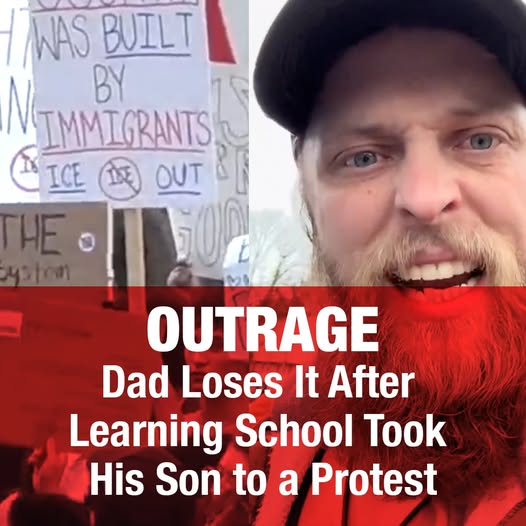
A Washington father recorded an emotional confrontation after learning that his 12-year-old son had been taken to a protest during school hours — without his knowledge or consent.
According to the father, the situation unfolded suddenly when he received a call from his son, who told him that his school had already brought students to a protest site. The call immediately raised alarm, prompting the father to begin recording as he rushed to the school.
In the footage, the father can be heard demanding answers from school staff, asking who authorized the decision, why parents were never notified, and how children were allowed to be taken into what he describes as an active protest environment.
The father repeatedly questions whether proper safety assessments were made and whether parental consent was considered at all before students were moved off campus. He expresses particular concern about the age of the children involved, emphasizing that his son is only 12 years old.
By the time the father arrived at the school, he says administrators had already rushed students back inside, effectively ending the outing before parents could observe or ask questions firsthand. This only intensified the father’s frustration, as he claims no clear explanation was provided.
At one point in the recording, the father speaks directly to his son and asks a simple but critical question:
“Did you consent to that?”
His son responds clearly:
“No. I didn’t want to.”
That exchange has become the focal point of the controversy, with many viewers questioning whether students were pressured or expected to participate regardless of their wishes.
The school has not publicly detailed how the decision was made, who approved it, or what policies were followed regarding parental notification. It also remains unclear whether the protest was part of a planned activity, a spontaneous decision, or tied to any curriculum-related event.
Critics argue that taking minors to political or activist events during school hours — especially without explicit parental consent — crosses a serious line. Supporters of the school, however, suggest the situation may be more complex and are urging people to wait for official clarification.
As of now, parents are reportedly demanding answers about oversight, consent procedures, and student safety protocols. The incident has reignited a broader debate over the role of schools in exposing children to protests and political demonstrations.
The situation remains unresolved, and questions continue to mount as parents await further explanation from school officials.