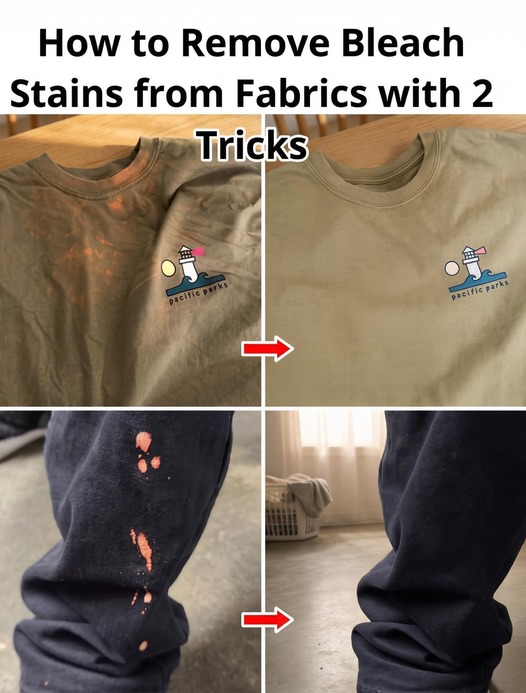
It happens in an instant—a quick splash while cleaning or a mix-up in the laundry, and suddenly your favorite shirt has a pale mark that won’t go unnoticed. Bleach stains can feel especially discouraging because they don’t just dirty fabric, they change it. The color disappears, leaving behind sharp, light patches that make otherwise good clothing seem ruined. Many people assume there’s nothing to be done and toss the item aside, but that reaction is often premature. With a bit of understanding and the right approach, some bleach marks can be softened or blended enough to make a garment wearable again.Bleach works differently than most stains, which is why traditional stain removers usually fail. Instead of adding residue, bleach strips dye from fabric fibers, creating areas with less or no color. While it’s true that the original shade can’t always be fully restored, that doesn’t mean the garment is beyond help. In certain situations, especially when the stain is small or recent, simple household techniques can reduce the contrast and improve the overall appearance. These methods focus on managing discoloration rather than reversing it entirely, offering a practical alternative to throwing clothes away.The first method works best when you catch the stain early. Bleach can continue to lighten fabric even after the initial spill, so stopping the process is important. Rinsing the area promptly with cold water helps, but you can go a step further by using a mild bleach-neutralizing solution. Products containing sodium thiosulfate are designed to counteract bleach, and when applied gently and rinsed thoroughly, they may prevent the stain from becoming more noticeable. Always test this on an inconspicuous area first to ensure the fabric reacts well.If the mark has already set, blending the color may be the best option. A careful application of rubbing alcohol mixed with a small amount of white vinegar can sometimes encourage surrounding dye to migrate slightly into the lighter area. Using a soft cloth or cotton swab, gently dab rather than rub to avoid damaging the fibers. This approach requires patience and works best on darker fabrics where contrast is strongest. While results vary, these simple methods can often extend the life of a garment. Instead of seeing bleach stains as the end of the road, they can be treated as a chance to salvage, reuse, and reduce waste with minimal effort.
Accidentally Bleached Your Clothes? Try These Two Simple Fixes Before Giving Up