Since the start of his second term in early 2025, President Donald J. Trump’s approval ratings have reflected a deeply divided American electorate…
Grappling with sweeping policy changes, significant economic concerns, and escalating international trade tensions.
Despite a tumultuous start marked by aggressive tariff policies, market fluctuations, snap government layoffs, and sharp political divisions, Trump’s overall job performance rating has shown both resilience and volatility — but with notable weaknesses tied to economic issues and trade policy.
This article examines how the American public views Trump’s presidency in the midst of tariff wars, economic uncertainty, immigration policies, and broader governance — based on multiple national polls conducted throughout 2025.
1. Early Second‑Term Approval: A Mixed Beginning
In the first weeks after Trump’s second inauguration, national surveys indicated that his overall approval was roughly divided, with many Americans remaining cautious but not uniformly against his presidency.
Some early polls found Trump’s job approval near the midpoint, with figures like 44 % approving and 53 % disapproving, suggesting a closely split electorate.
This aligns with reports from Reuters/Ipsos and other national survey data showing that around 44 % of Americans approved of his overall job performance in the early weeks of tariff implementation while a slight majority disapproved.
Polls also showed relatively higher approval for immigration control, with around half of respondents expressing support for how Trump was handling border policy — yet this support often did not carry over to economic or trade issues.
2. The Tariff Wars: Public Opinion Turns Negative
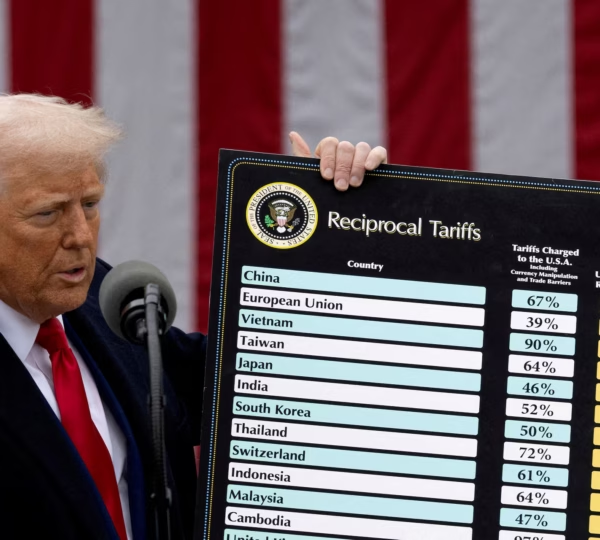
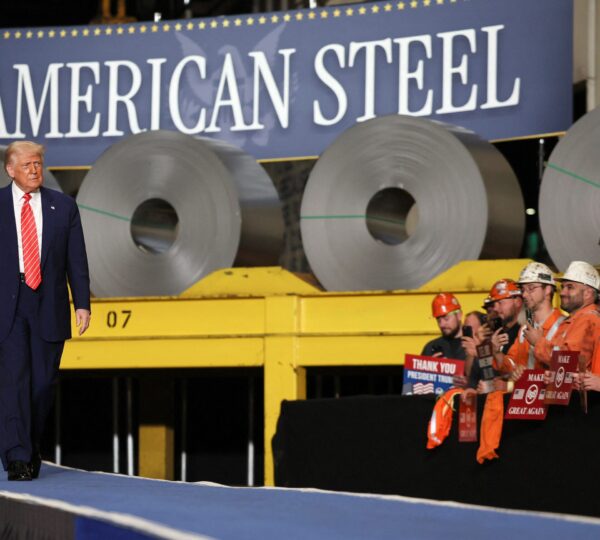
One of the Trump administration’s signature early actions was the imposition of 25 % tariffs on steel and aluminum imports, aimed at correcting trade imbalances and reviving U.S. manufacturing.
Canada, the European Union, and other trading partners responded with retaliatory tariffs on billions of dollars’ worth of American exports, intensifying global trade tensions.
Public Views on Tariffs
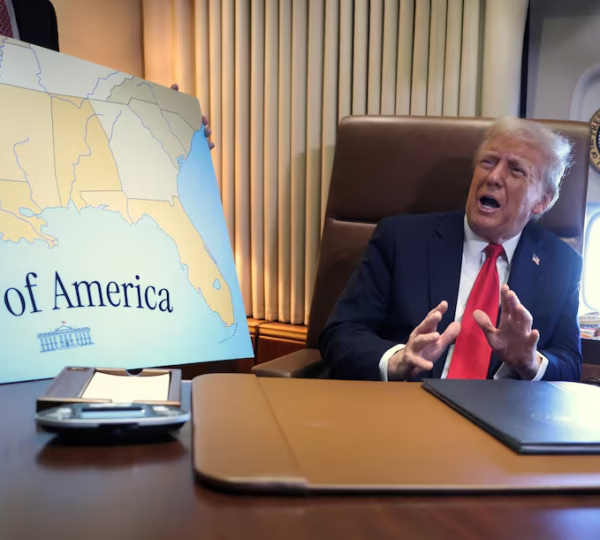
Across multiple national surveys, tariff policy emerged as one of Trump’s weakest areas in public opinion:
A Pew Research Center survey reported that 59 % of Americans disapproved of tariff increases, with just 39 % approving — significantly contributing to Trump’s overall low job approval.
Comparable results from later Pew polling showed roughly 61 % disapproval of the administration’s tariff policies, with only about 38 % offering approval.
A Harris/Marquette Law School poll found that 58 % of adults believed tariffs would hurt the U.S. economy, versus only 28 % who thought tariffs would be beneficial.
Other surveys showed many Americans expecting tariffs to lead to higher prices on everyday goods, with about 64 % disapproving of how Trump handled these trade issues.
In short, tariffs have been broadly unpopular across party lines, though Republicans are significantly more supportive of them than Democrats or independents.
In Pew data, 68 % of Republicans approved of tariff policies, compared with overwhelming Democratic disapproval around 89 %.
3. Economy and Inflation: A Central Weakness
Although Trump’s supporters often cite economic performance and job growth as strengths, recent polling reveals mounting skepticism among the public regarding the overall economy and cost of living.
Economic Approval Falters
According to the CNBC All‑America Economic Survey, Trump’s economic approval rating was around 43 %, with 55 % disapproving, marking a rare net negative economic rating in his presidency.
YouGov polling indicated that only 43 % of Americans approved of how Trump was handling jobs and the economy, while 47 % disapproved — an erosion from earlier in his term.
Many voters linked tariffs directly to rising inflation and higher prices, with some polls showing that a significant majority expected protective tariffs to boost inflation or household costs.
Inflation Concerns
Several surveys showed Americans fearing that tariff‑induced price increases would diminish purchasing power and hurt family budgets — a concern that sometimes outweighed any potential optimism about job growth or industrial revitalization.
In some polls, more than two‑thirds of respondents believed tariffs would raise prices, and pluralities said tariffs would be bad for the economy.
4. Overall Approval Trends: A Divided Nation
Broad approval trends suggest deep polarization rather than unified support or opposition:
By mid‑2025, Trump’s overall approval hovered in the low‑to‑mid 40 % range, with disapproval often outpacing approval by several points in national averages.
In a Pew report from April, his overall job approval was about 40 %, down from earlier in the year, with rising disapproval on trade, spending cuts, and executive action.
Partisan Differences
Trump’s approval ratings reflect sharp divides by political affiliation:
Republicans and Republican‑leaning independents overwhelmingly continue to approve of his presidency and policies, including tariffs, immigration reform, and deregulation.
Democrats overwhelmingly disapprove, particularly on tariffs, trade, and economic policy.
Independents, a key swing voting bloc, are often skeptical of Trump’s economic direction and tariff strategy, making his appeal more limited outside the Republican base.
5. Issue‑Specific Approval Highlights
Here’s how Trump’s handling of major issues is viewed in contemporary polling:
Immigration
Support for Trump’s immigration policies has generally been higher than for tariffs or economic policy, with some surveys showing roughly 50 % or more approval on border enforcement and immigration control — though other polls noted declines from earlier peaks.
Tariffs & Economy
Tariffs have been consistently unpopular, with disapproval often exceeding 60 % in several large, reputable surveys.

Economic approval — particularly concerning inflation, cost of living, and tariffs’ impact — tends to lag overall job approval and remains one of Trump’s weaker issue areas.
Government Cuts and Federal Spending
Fewer than half of Americans approve of Trump’s budget cuts and federal spending priorities, with many polls showing public concerns about the scope and consequences of spending cuts.
6. What Poll Trends Suggest About Trump’s Standing
Resilience With Base Support
Trump retains strong loyalty among core Republican voters, who often approve of his bold policy actions and view him as fulfilling campaign promises.
Economic Headwinds
Public unease about tariffs, inflation, and the broader economy weakens his appeal beyond his base. Many voters believe tariffs will raise consumer prices and hurt the U.S. economy — concerns that can dampen approval over time.
Polarization
Polarization remains deep: while his strongest supporters stand firmly with him, many independent and Democratic voters continue to reject his policy direction, especially in trade and economic management.
7. Conclusion: Trump’s Popularity in Context
Donald Trump’s presidency during the ongoing tariff wars and economic debate is marked by mixed and evolving public sentiment.
While supporters laud his boldness and assertive trade stance, majorities of Americans across multiple polls have expressed disapproval of tariff policy and concern about its economic effects.
Overall job approval consistently hovers around the low‑to‑mid 40 % level, indicating a divided and unsettled electorate.
Public opinion remains dynamic — with views on tariffs, inflation, immigration, and economic management continuing to shape the broader evaluation of Trump’s performance in office.
Future polling will likely reflect how these issues evolve and how voters weigh immediate economic impacts against long‑term policy goals.