In mid‑January 2026, political tensions in Minnesota erupted into one of the most serious clashes in recent U.S. domestic politics, as President Donald Trump publicly threatened to invoke the Insurrection Act.
A rarely used federal law — in response to protests and unrest connected to an expansive federal immigration enforcement operation.
What unfolded in Minnesota in the first weeks of 2026 — including shootings, large‑scale protests, federal legal actions, and a growing national political controversy.
Now stands as a defining flashpoint in debates over immigration enforcement, state authority, civil rights, and the limits of presidential power.
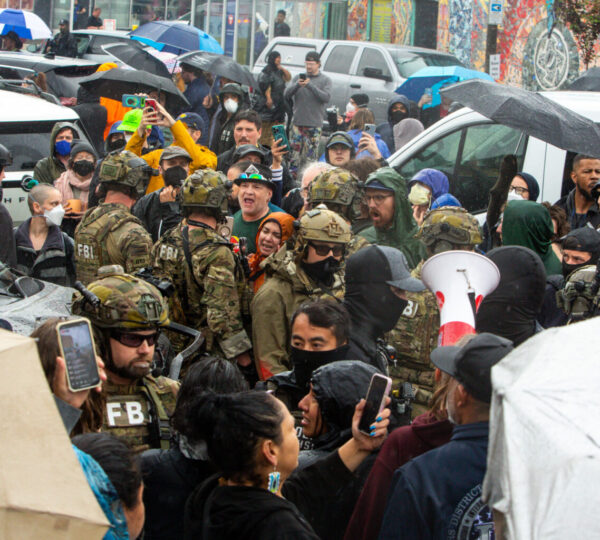
In early January, the U.S. Department of Homeland Security (DHS) and Immigration and Customs Enforcement (ICE) launched what officials called an expanded enforcement operation in the Minneapolis–Saint Paul area — one of the largest ICE operations undertaken in recent years.
This surge involved thousands of federal agents sent into neighborhoods, federal buildings, and public spaces with the stated goal of enforcing immigration laws, arresting undocumented migrants, and detaining individuals suspected of immigration violations.
Federal officials described the effort as lawful and necessary, while local critics called it overwhelming, disruptive, and aggressive.
2. Fatal Shooting of Renee Nicole Good and Subsequent Incidents
The crisis escalated sharply after a 37‑year‑old Minneapolis woman named Renee Nicole Good was shot and killed by an ICE officer on Jan. 7, 2026, during an enforcement action.
She was a U.S. citizen, and her death immediately sparked outrage, protests, and nationwide attention.
According to federal statements, the ICE officer fired his weapon after reporting that Good’s vehicle attempted to strike him or others.
Local authorities and community members have disputed elements of the official narrative, and the incident became a focal point for critics who accused federal agents of excessive force.
In the days that followed, another ICE‑involved shooting occurred in north Minneapolis, in which a Venezuelan man was shot and wounded during an enforcement stop, raising tensions further.
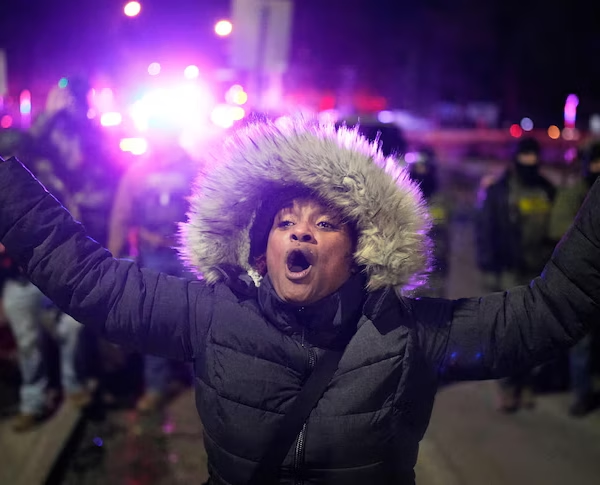
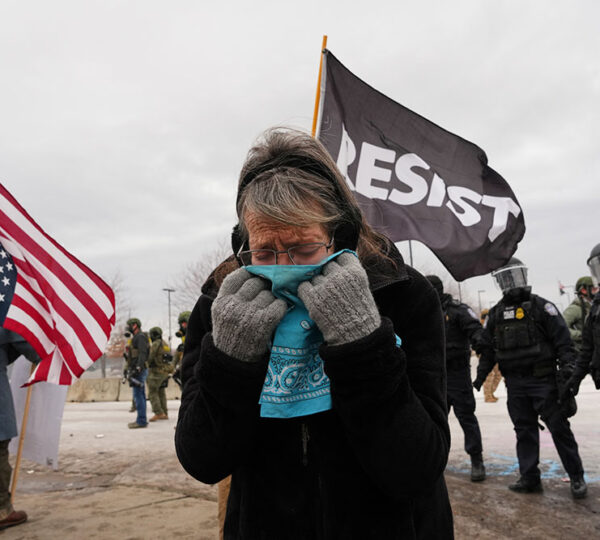
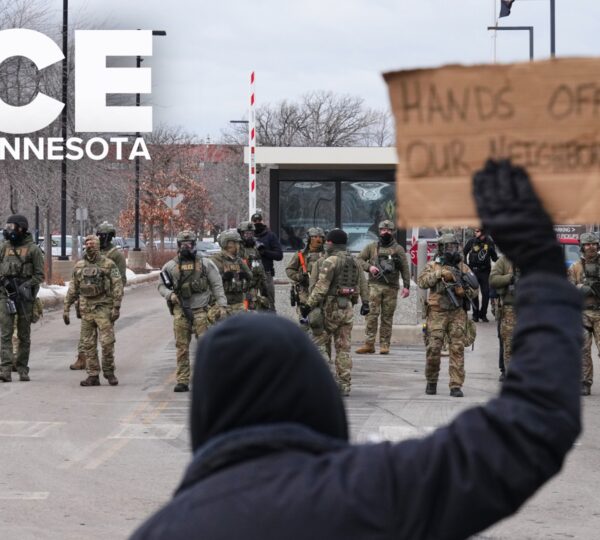
These shootings galvanized large daily protests, demonstrations, and confrontations between residents and law‑enforcement officials, with some clashes involving tear gas, flash‑bang devices, and arrests.
3. Protests, Public Reaction, and Local Official Responses
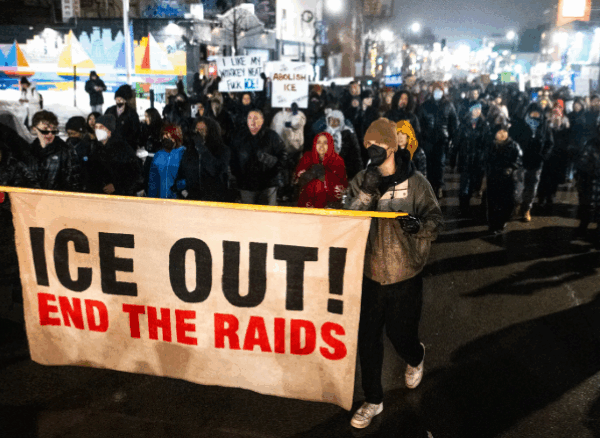
In the wake of the shootings, thousands of Minnesotans — including immigrant communities, civil rights groups, students, and local activists — took to the streets in Minneapolis and St. Paul.
These demonstrations varied from peaceful vigils to tense clashes near federal enforcement activities.
Minnesota’s Governor, Tim Walz, and Minneapolis Mayor Jacob Frey publicly condemned the federal enforcement tactics.
They called for de‑escalation, detailed concerns about civil liberties, and accused federal agents of creating chaos in local communities.
State officials also emphasized the importance of peaceful protest and opposed federal interference in state public‑safety operations.
In response to public outcry, the Minnesota Bureau of Criminal Apprehension (BCA) launched an independent investigation into the Jan. 7 shooting, and the Federal Bureau of Investigation (FBI) also became involved in evidence collection.
4. Legal Actions Between Minnesota and the Federal Government
Amid the unrest, Minnesota, Minneapolis, and St. Paul filed a lawsuit against the federal government seeking to stop or limit the ongoing immigration enforcement operation.
The lawsuit marked a significant legal clash between state and federal authorities — one in which Minnesota accused the Department of Homeland Security and ICE of unlawful conduct and overreach.
5. Trump’s Insurrection Act Threat
Amid rising tensions, on January 15, 2026, President Trump issued a public statement signaling that he might invoke the Insurrection Act if Minnesota authorities did not restore order and protect federal agents from what he described as attacks and obstruction.
The Insurrection Act, originally enacted in 1807, permits a U.S. president to deploy the active‑duty military or federalize National Guard troops within a state under extraordinary circumstances — such as to suppress insurrection, domestic violence, or obstruction of federal law — without state consent. Such use is rare and legally controversial.
Trump’s threat of invoking this law — a step that could potentially bring military troops onto American streets — represented an unusual escalation. It came as federal officials labeled some protest activity “insurrectionist” and described unrest as interference with federal operations.
6. National Political and Legal Commentary
The suggestion that the Insurrection Act might be invoked sparked broad national debate:
Democratic lawmakers labeled the move an overreach and an inappropriate use of military authority against civil protests.
Some Republican lawmakers, including prominent figures in Congress, warned against deploying the law, urging reliance on local law enforcement instead.
Legal experts noted that invoking the Insurrection Act is extraordinary and could face immediate constitutional challenges, especially if deployed over state objections.
On January 16, 2026, the White House signaled a slight de‑escalation when President Trump stated there was “no reason right now to use the Insurrection Act,” even as he maintained that it remained a legal option if conditions deteriorated.
7. Broader Impact on Daily Life in Minnesota
The federal enforcement presence and associated protests disrupted daily life across the Twin Cities:
Schools shifted to remote learning in some districts amid safety concerns.
Local businesses and residents reported heightened anxiety and uncertainty over federal operations.
Community leaders and civil‑rights advocates warned that aggressive tactics were eroding trust between law enforcement and trusted community networks.
8. Constitutional Stakes and Ongoing Legal Battles
With protests continuing and multiple legal actions underway — including independent investigations into use of force, Minnesota’s lawsuit against federal agencies, and newly–reported Justice Department inquiries into whether state officials impeded federal enforcement — the situation remains legally and politically unresolved.
Experts emphasize that any attempt to deploy federal troops under the Insurrection Act would almost certainly lead to swift legal challenges in federal court.
Summary
The events in Minnesota in January 2026 — from an expanded federal immigration enforcement operation and fatal shootings, to widespread protests and a presidential threat to invoke the Insurrection Act — reflect a convergence of critical issues in modern U.S. politics:
the reach and methods of federal immigration enforcement,
the boundaries of state and local authority,
the definition and limits of executive power, and
the role of civil protest and public dissent.
The ongoing legal, political, and community responses will continue to shape this situation in the weeks and months ahead.